Ten of Swords Tarot Card Meaning
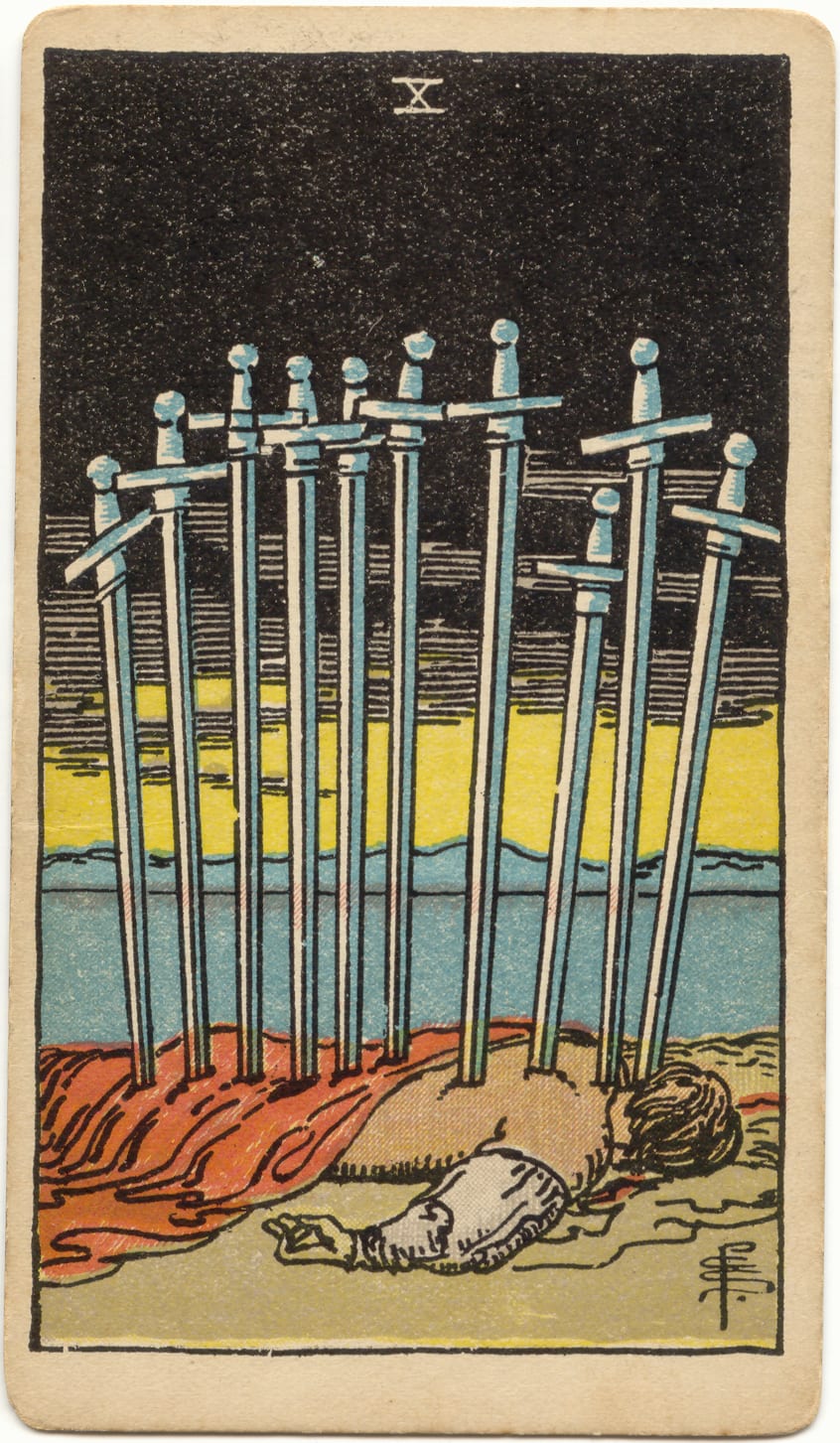
Ten of Swords General Meaning
Ten of Swords upright: This is a hard, definitive ending. Let it be the end — it's clean, and it's the bottom, not more to come.
Ten of Swords reversed: You're recovering after hitting bottom. The worst is genuinely over — build from here.
Ten of Swords Love Meaning
Ten of Swords upright: This relationship has reached a clear, painful end. It's hard, but it's unambiguous — don't reopen it looking for a different answer.
Ten of Swords reversed: You're rebuilding after this relationship's definitive end. Keep building forward, not looking back.
Ten of Swords Career Meaning
Ten of Swords upright: This professional loss feels total. It is what it is — start planning the next chapter instead of trying to salvage this one.
Ten of Swords reversed: Recovery is beginning after this professional low point. Trust the rebuild — you're past the worst of it.
Ten of Swords Money Meaning
Ten of Swords upright: This is a real financial low point. It's painful, but it's the bottom — not the start of more losses.
Ten of Swords reversed: You're starting to recover after this financial setback. Keep moving forward from here.
Ten of Swords Health Meaning
Ten of Swords upright: This is a difficult health low point, and it marks a clear turning point. The bottom is behind you as of now.
Ten of Swords reversed: Recovery is beginning after this setback. Trust it and keep building from here.
Ten of Swords Decisions Meaning
Ten of Swords upright: This may feel like the end of something — it is, and it's a clean end. That's better than a slow drain.
Ten of Swords reversed: You're on the other side of the worst of it now. Decide from that recovered place, not the old low point.
Deeper Meaning
Symbolism
A figure lies face down, ten swords piercing his back, beneath a dark sky just beginning to brighten at the horizon — a scene of total, unambiguous defeat, softened only by the small strip of dawn light suggesting the very worst point has, in fact, already passed.
Correspondences
Numbered 10, marking the suit's culmination — Swords' full expression of total, unambiguous ending. Associated with the final decan of Gemini, closing the suit's arc with total, if painful, completion.
Waite's Reading
Waite reads this stark image as 'pain, affliction' at its most complete, but is careful to point to the dawn breaking at the horizon as deliberate and significant — for him the card's true message is not endless ruin but the fact that this particular ending is total and complete, meaning what follows can only be improvement rather than further decline.
Combinations
Beside The Sun, the sequence suggests a hard bottom giving way to genuine, unclouded recovery. Near Death, both cards concern definitive endings, though Ten of Swords centers the pain more starkly where Death centers necessary transformation.