The Devil Tarot Card Meaning
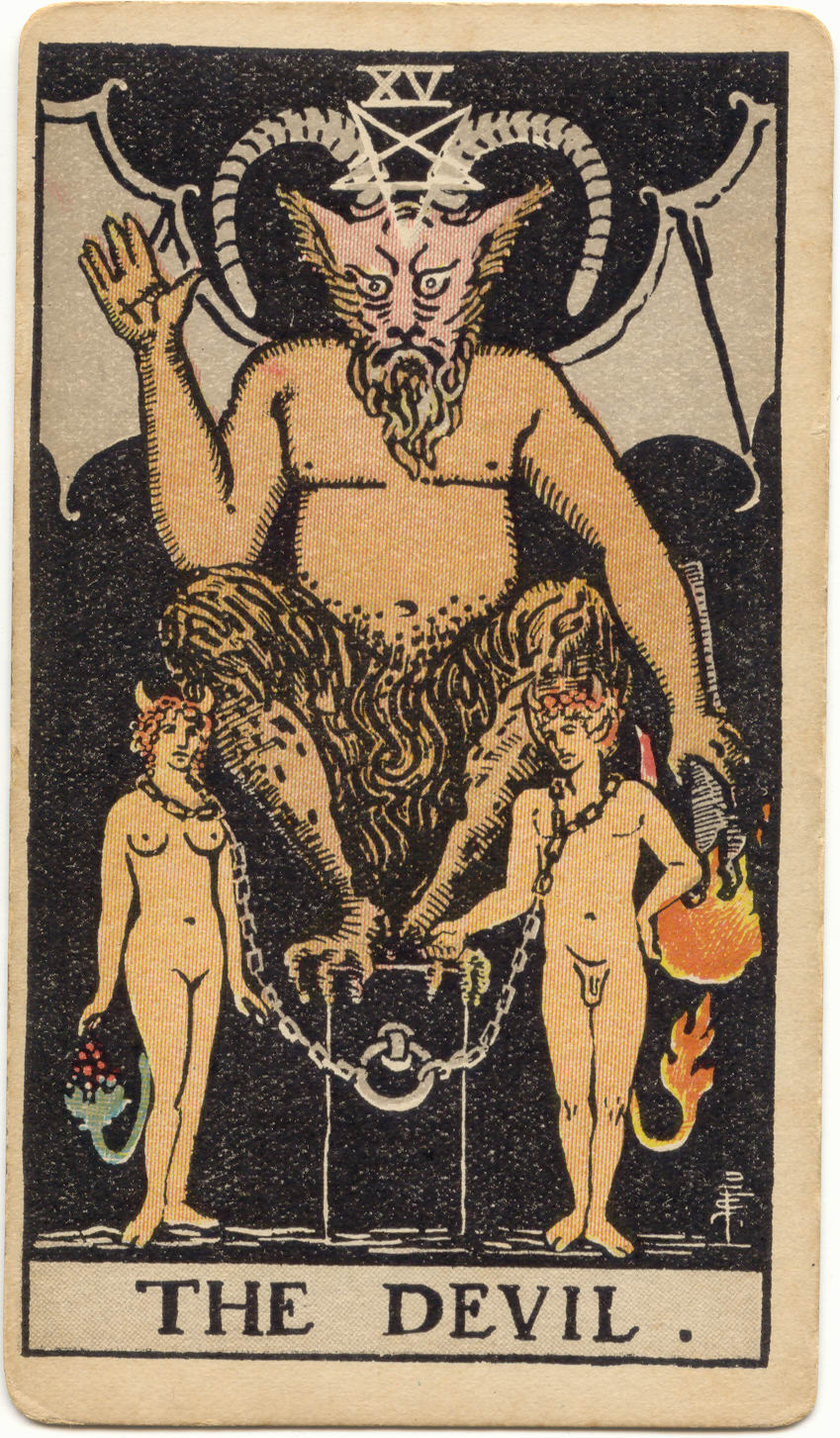
The Devil General Meaning
The Devil upright: Name the thing you're attached to — the habit, the dynamic, the comfort — and admit it has more grip on you than you'll say out loud.
The Devil reversed: You're finally loosening the grip of a pattern that's held you too long. Keep going — this is real progress, not a relapse waiting to happen.
The Devil Love Meaning
The Devil upright: This connection runs on dependency more than health. The passion is real; so is the fact that it isn't good for you.
The Devil reversed: You're breaking free from a toxic pattern you've finally named correctly. Don't talk yourself back into it.
The Devil Career Meaning
The Devil upright: You're staying in this job out of fear or comfort, not necessity. Be honest about which one it is before you call it a real constraint.
The Devil reversed: You've taken the first real step out of something you'd outgrown. Keep moving — don't stall halfway out the door.
The Devil Money Meaning
The Devil upright: This spending or dependency has more grip on you than you've admitted. Name the actual number, not the story you tell about it.
The Devil reversed: You're breaking a bad financial habit right now, and it's genuinely hard. Keep going — this is the difficult part working.
The Devil Health Meaning
The Devil upright: This habit — substances, food, rest — has more control over you than you're willing to say. Say it plainly, to yourself at least.
The Devil reversed: You're making real progress breaking free of this. Don't undercut it by pretending you're not still working at it.
The Devil Decisions Meaning
The Devil upright: Fear or habit is making this decision, not you. Notice which one, and decide again from a clearer place.
The Devil reversed: You're ready to make the choice that finally breaks this pattern. It'll be uncomfortable. Make it anyway.
Deeper Meaning
Symbolism
A horned, bat-winged figure looms over a chained man and woman, deliberately echoing the composition of The Lovers directly — the same two figures, now bound rather than freely choosing each other. Crucially, the chains around their necks are loose enough to slip off — the bondage depicted is one that could be escaped, if the two figures chose to try. An inverted pentagram sits above the Devil's head, a symbol of matter dominating spirit rather than the reverse. Small tails (one grape-clustered, one flame-tipped) hint that this bondage has its own seductions.
Correspondences
Numbered 15, associated with the zodiac sign Capricorn — material ambition, structure, and the shadow side of discipline turned into rigid compulsion. The Hebrew letter Ayin (eye) is traditionally linked here, tying the card to perception itself being distorted or narrowed by fixation.
Waite's Reading
Waite is emphatic on one point above all others: 'the Devil, in the exoteric sense, is not the horned goat of caricature' but rather a figure representing bondage that is fundamentally illusory and self-imposed — hence the loose chains the two bound figures could, in principle, simply lift off. He reads the card as being about attachment to the material and the animal side of nature when that attachment has become compulsive rather than chosen, and stresses that liberation here does not require an external savior, only the willingness to act.
Combinations
Beside The Lovers, the deliberate visual echo invites a direct comparison — chosen union against compelled bondage. Near Seven of Cups (illusion, tempting but empty options), the pairing reinforces a theme of attractive but ultimately hollow attachment. Next to Temperance or Star, the Devil's bondage stands in clear contrast to those cards' healthier integration and hope, often signaling the reading is highlighting exactly what needs to be released.